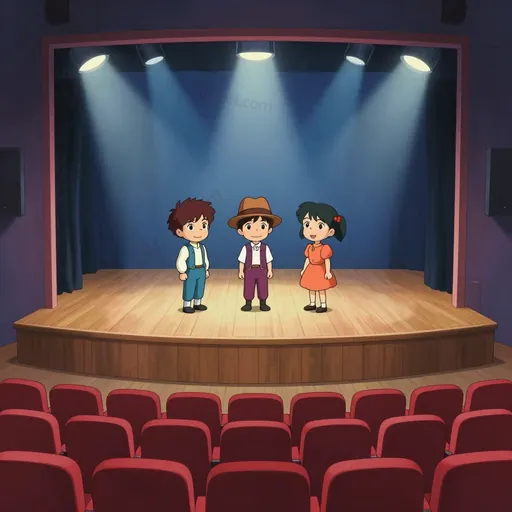
thrust stage
Definition
Noun: A thrust stage is a type of theatrical stage that projects or extends out into the audience area. The audience is seated on three sides of the stage platform, creating a more intimate and immersive viewing experience compared to a traditional proscenium stage.
Usage
The term is used specifically in the context of theater architecture and performance spaces. * The play was performed on a thrust stage, allowing the actors to connect more directly with the audience. * Many modern theaters are built with a thrust stage to encourage a different style of performance and staging.
Advanced Usage
- Historical Context: The thrust stage design is reminiscent of the stages used in Elizabethan theaters, such as Shakespeare's Globe.
- Directorial Considerations: Staging a production on a thrust stage requires careful consideration of sight lines and blocking so that all sections of the audience have a good view.
Variants and Related Words
- Thrust (noun, in this context): The act of extending or projecting forward. This is the architectural principle from which the stage gets its name.
- Proscenium stage (noun): A traditional stage framed by an arch (the proscenium arch), with the audience seated directly in front.
- Theater-in-the-round (noun): A stage surrounded by audience on all sides, which is a different configuration from a thrust stage.
Synonyms
- Apron stage (This is a very close synonym, though sometimes an "apron" refers specifically to the part of a proscenium stage that extends in front of the curtain, while a "thrust stage" is a dedicated design.)
- Platform stage
- Projecting stage
Antonyms
- Proscenium stage
- End stage (A stage at one end of a room with the audience facing it directly, similar to a proscenium but without the arch.)
Noun
-
a theater stage that extends out into the audience's part of a theater and has seats on three sides